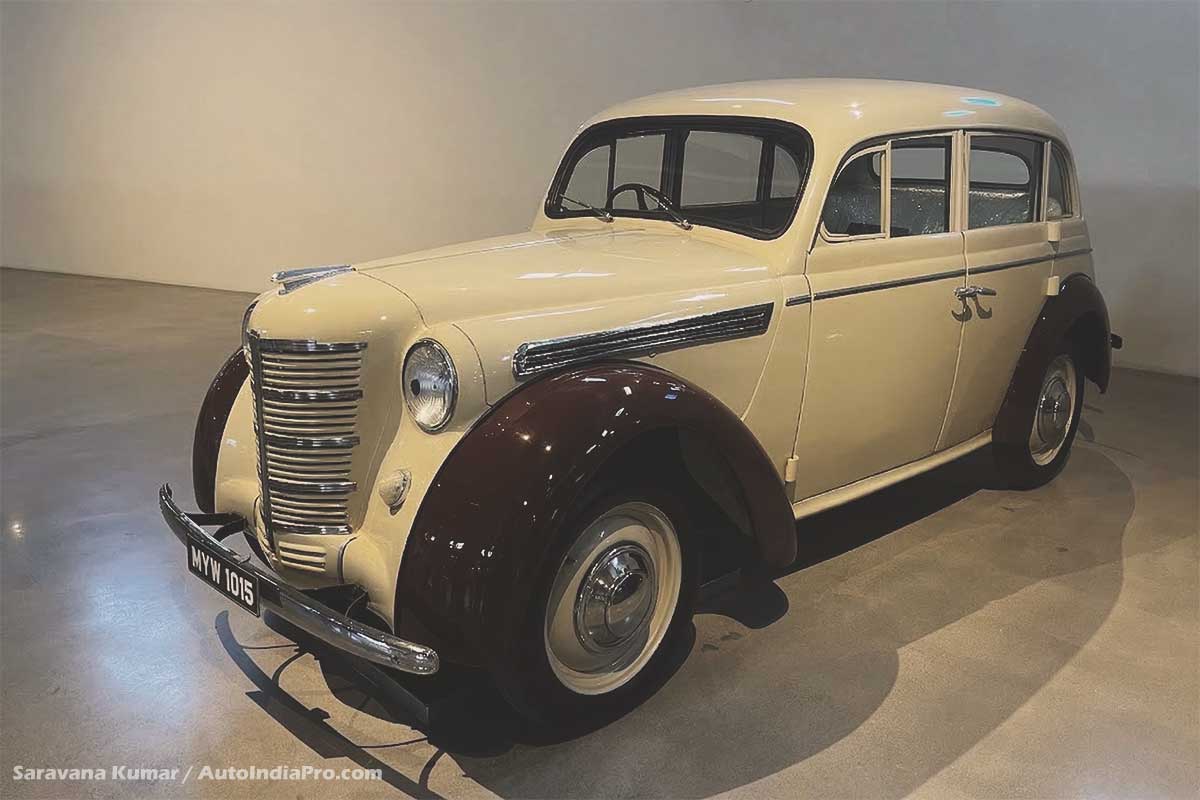
When you look at the 1936 Opel Kadett displayed at the Payana Car Museum, you are looking at more than just a vintage car. You are looking at a revolutionary idea. Launched in December 1936, the Kadett was Opel’s ambitious answer to a growing demand for high-volume, low-cost transportation.
Opel Kadett – A Connection to History
The Kadett was introduced to the world by Heinrich Nordhoff, Opel’s commercial-technical director. If that name sounds familiar, it’s because Nordhoff later became the legendary figure who transformed Volkswagen into a global powerhouse. You can see the seeds of that “mass-production” genius right here in the lines of this 1936 model.
While production was sadly cut short in 1940 due to World War II, the Kadett’s influence lived on for decades, eventually becoming one of the most successful nameplates in automotive history.
Engineering for the Everyman
The Kadett wasn’t built to be a luxury cruiser like the Daimlers of its time; it was built to be reliable, easy to maintain, and accessible. As I framed my shots with my iPhone 13, the simplicity of its design really stood out.
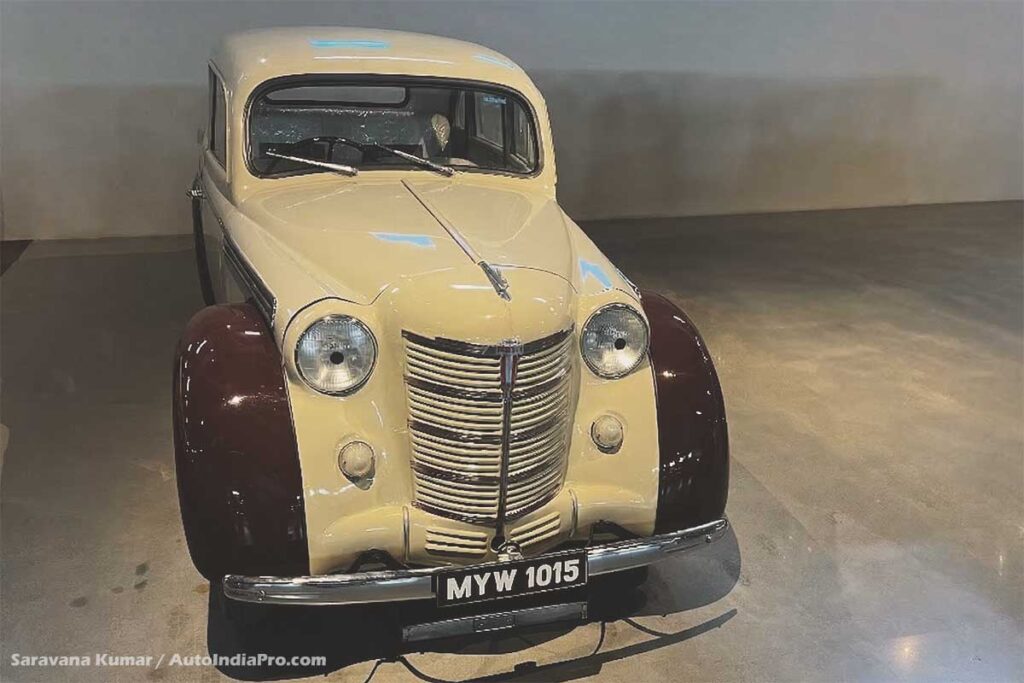
Technical Snapshot:
- Engine: 1.1-Litre, 4-Cylinder Inline, Side-Valve (1074 CC)
- Transmission: 3-Speed Manual
- Performance: 23 hp @ 3400 rpm—perfect for the era’s emerging highways.
- Stopping Power: Advanced for its budget, featuring Hydraulic Drums.
- Top Speed: A respectable 98 kph (61 mph).
The Collector’s Vision
This particular specimen, collected by Shri Dr. D. Veerendra Heggade, is a testament to the diverse range of the Payana collection. While the museum houses grand royal cars, the inclusion of the Kadett shows a deep respect for the vehicles that actually put the world on wheels. It’s a clean, honest machine that represents the dawn of modern commuting.
Why it’s a Must-See
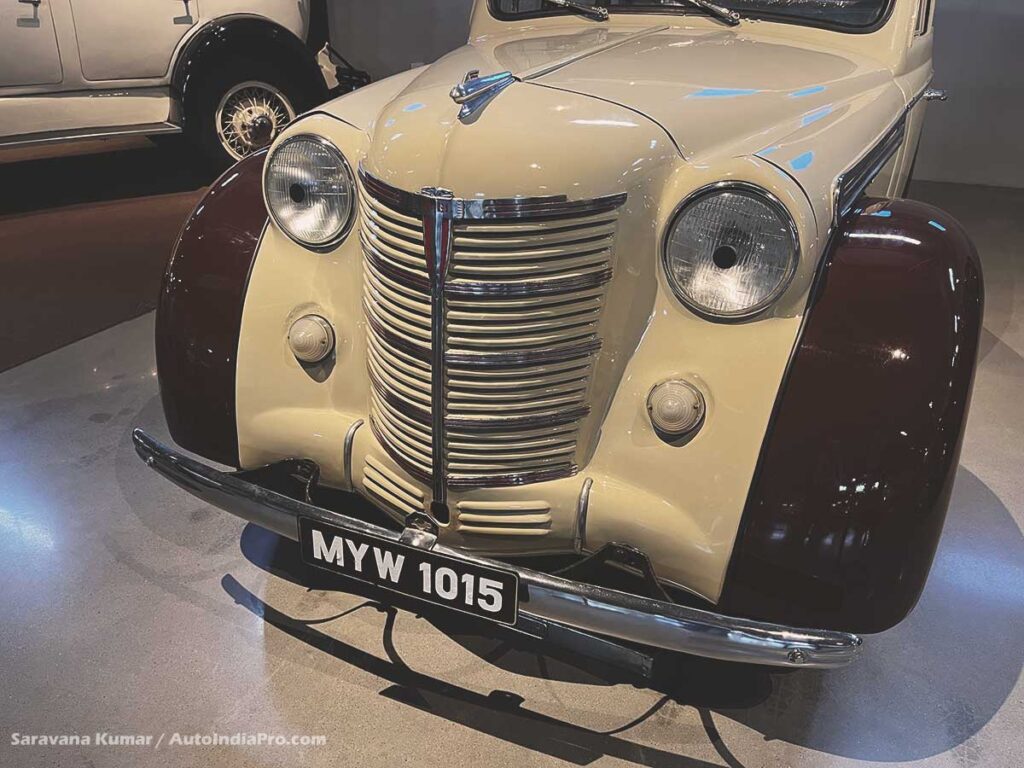
In an age of complex electronics and massive SUVs, the Opel Kadett reminds us of a time when “less was more.” It was a car designed for the family, for the worker, and for the future. Seeing it preserved here in Mysuru allows us to appreciate the German roots of the global small-car revolution.
Photography by Saravana Kumar
Captured at Payana Car Museum, Mysuru | Shot on iPhone 13